Nourishing Comfort Bowl with Grilled Chicken or Tofu and Roasted Vegetables
- Jillian Guralski
- Jun 4
- 5 min read

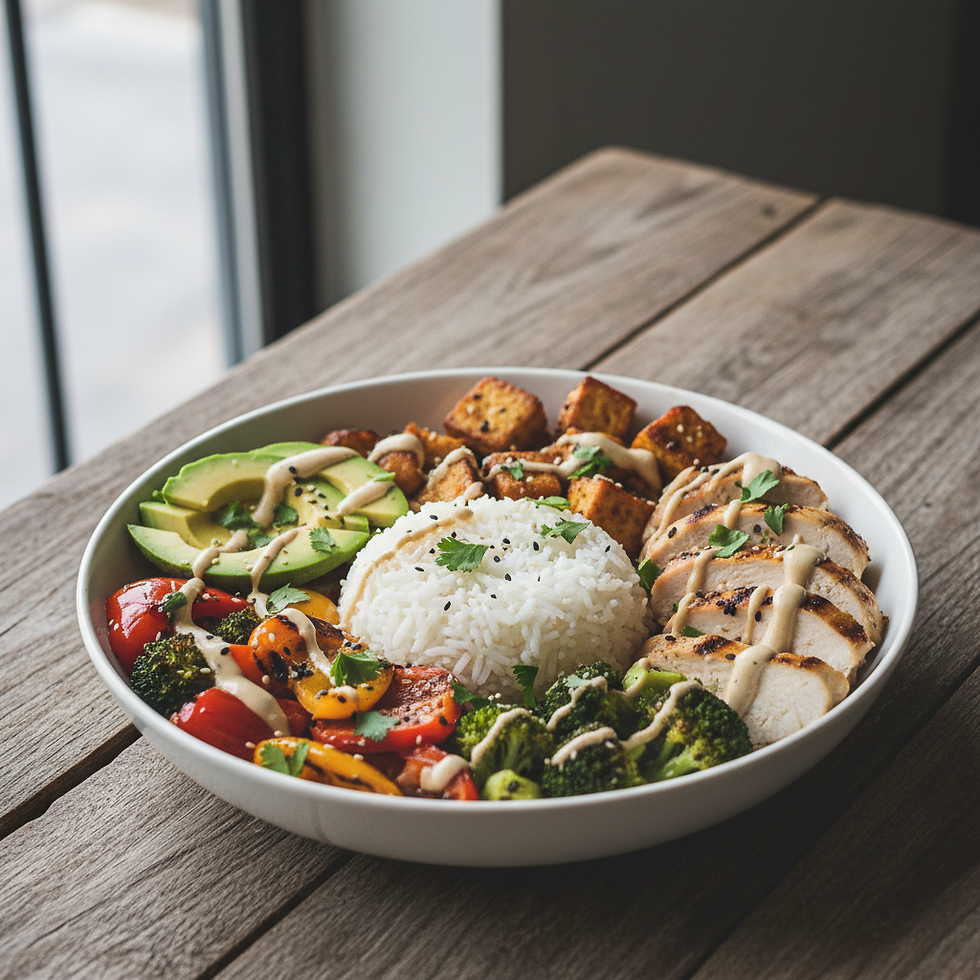
Some meals just feel right. A comfort bowl hits that sweet spot between something that tastes indulgent and something that genuinely fuels your body. Built on a base of fluffy rice, layered with grilled chicken or crispy tofu, packed with roasted vegetables, and finished with creamy avocado and a bold drizzle, this bowl is one of the most reliable, repeatable meals you can add to your week.
It works for meal prep. It works for weeknight dinners. And it works whether you eat meat, follow a plant-based diet, or land somewhere in between.
Why a Bowl Format Works So Well
The bowl format is not just a food trend. It is a genuinely smart way to eat. Everything sits together in one dish, so every bite tends to include a mix of protein, carbs, healthy fat, and vegetables. That variety means you are less likely to feel unsatisfied after eating.
A well-built bowl also gives you built-in portion balance. The base handles your carbohydrates, the protein layer covers muscle repair and satiety, the vegetables deliver vitamins and fiber, and the avocado and sauce provide flavor and healthy fats. You do not have to overthink it. The structure does the work.
Start With the Right Rice Base
White rice is the classic choice, and it works beautifully here. It is neutral, filling, and pairs with almost any topping. If you want more fiber and a slightly nuttier flavor, brown rice is a solid swap. It takes longer to cook but keeps you full for longer, thanks to its higher fiber content.
For something a little more interesting, try cooking your rice in coconut milk. Use half coconut milk and half water. The result is subtly creamy, lightly sweet, and pairs especially well with roasted sweet potatoes and a peanut or tahini drizzle.
Aim for about half a cup to three-quarters of a cup of cooked rice per bowl. That gives you enough carbohydrates for energy without making the base too heavy.
Grilled Chicken vs. Crispy Tofu
Both proteins work. The choice comes down to your preference, your diet, or even what you have on hand that day.
Grilled chicken is hard to beat for lean protein. A standard 4-ounce serving of grilled chicken breast delivers around 35 grams of protein with very little fat. For the best results, marinate the chicken for at least 30 minutes before grilling. A simple marinade of olive oil, lemon juice, garlic, paprika, and a pinch of cumin works well. Grill over direct heat for about 3 minutes per side, then let it rest before slicing. Resting keeps the juices inside the meat instead of running out onto the cutting board.
Crispy tofu is the plant-based answer, and when done right, it is genuinely satisfying. The key is moisture removal. Press extra-firm tofu for at least 20 minutes using a clean towel and something heavy. Then tear it into irregular pieces rather than cutting uniform cubes. The rough edges create more surface area, which means more crispiness. Toss in a little cornstarch, sesame oil, and soy sauce, then roast at 425°F for 25 to 30 minutes, flipping once halfway through. The result is golden, chewy, and full of flavor.
A 4-ounce serving of firm tofu provides around 10 grams of protein. It is lower than chicken, but pairing it with a tahini or peanut-based sauce adds a few extra grams and rounds out the amino acid profile nicely.
Roasting Vegetables the Right Way
Roasting transforms vegetables. The high heat caramelizes their natural sugars, creates crispy edges, and deepens the flavor in a way that steaming or boiling simply cannot match.
The key detail most people miss is grouping vegetables by cooking time. Dense root vegetables like sweet potatoes, carrots, and beets need 25 to 30 minutes at 400°F to 425°F. Softer vegetables like broccoli, zucchini, and bell peppers take only 15 to 20 minutes. If you roast them together without thinking about this, some will be perfectly caramelized while others turn soft and watery.
A good bowl-ready vegetable mix to start with:
Broccoli florets
Cubed sweet potato
Red bell pepper strips
Red onion wedges
Zucchini rounds
Toss everything in olive oil, season with salt, pepper, garlic powder, and a little smoked paprika, then spread on a baking sheet in a single layer. Crowding the pan traps steam and prevents browning, so use two sheets if needed.
Nutritionally, roasted vegetables are a powerhouse. Bell peppers are high in vitamin C. Broccoli delivers vitamin K and folate. Sweet potato provides beta-carotene and long-lasting energy from complex carbohydrates. Combined, they bring serious micronutrient density to the bowl without adding many calories.
Avocado: More Than a Garnish
Avocado is not just here to look good. Half an avocado provides around 10 to 15 grams of healthy monounsaturated fat, more potassium than a banana, and a creamy texture that ties the whole bowl together.
Fat is essential for absorbing fat-soluble vitamins, including vitamins A, K, and E, all of which are present in the roasted vegetables. So the avocado is not an optional extra. It is actually helping your body absorb more from everything else in the bowl.
Slice it fresh just before serving. A squeeze of lemon or lime over the top prevents browning and adds a bright, citrusy note that lifts the flavors of the entire dish.
The Sauce Makes the Bowl
A great sauce is the difference between a bowl that feels like a meal and one that just feels like ingredients sitting next to each other. It binds everything, adds depth, and gives the dish its personality.
Three sauces that work especially well with this bowl:
Creamy Lemon Tahini
Whisk together 3 tablespoons of tahini, 2 tablespoons of lemon juice, 1 minced garlic clove, 1 teaspoon of maple syrup, and 2 to 3 tablespoons of warm water to thin it out. Drizzle generously. This works beautifully with both chicken and tofu.
Spicy Peanut Drizzle
Blend 3 tablespoons of peanut butter with 1 tablespoon of soy sauce, 1 tablespoon of rice vinegar, 1 teaspoon of sesame oil, and a teaspoon of Sriracha. Add warm water to reach a pourable consistency. Rich, nutty, and slightly spicy. Best with crispy tofu and coconut rice.
Miso Ginger Dressing
Mix 2 tablespoons of white miso paste with 1 tablespoon of rice vinegar, 1 teaspoon of freshly grated ginger, 1 teaspoon of maple syrup, and a splash of sesame oil. Light, umami-forward, and slightly tangy. Pairs naturally with broccoli, edamame, and grilled chicken.
Putting It All Together
Assembly is straightforward. Start with the rice, then add sections of roasted vegetables, followed by the protein. Place avocado slices on one side, then drizzle the sauce across everything. Finish with optional toppings like sesame seeds, fresh herbs, a sprinkle of chili flakes, or a wedge of lime.
For meal prep, keep the components separate in airtight containers. The rice, vegetables, and protein all hold well in the fridge for up to four days. Add the avocado and sauce only when you are ready to eat to keep everything fresh.
A completed bowl typically lands between 600 and 725 calories, with 33 to 50 grams of protein depending on whether you use chicken or tofu, and 5 to 14 grams of fiber. It is filling without being heavy, balanced without being boring.
Make It Your Own
The beauty of a bowl is its flexibility. Swap the rice for quinoa or cauliflower rice. Use whatever vegetables are in season or whatever needs to be used up in your fridge. Try a mango salsa instead of avocado for a tropical twist. Add a soft-boiled egg, a handful of chickpeas, or a scoop of hummus if you want to change the texture.
There is no single version of this bowl. There is only the version you build today, with what you have, for how you feel right now. And that is exactly what makes it so worth coming back to.
Start with the formula. Rice, protein, roasted vegetables, avocado, sauce. Once you have that down, the variations are endless.

Comments