Discover 5 Unexpected Sources of Protein You Already Love
- Jillian Guralski
- Jun 12
- 4 min read

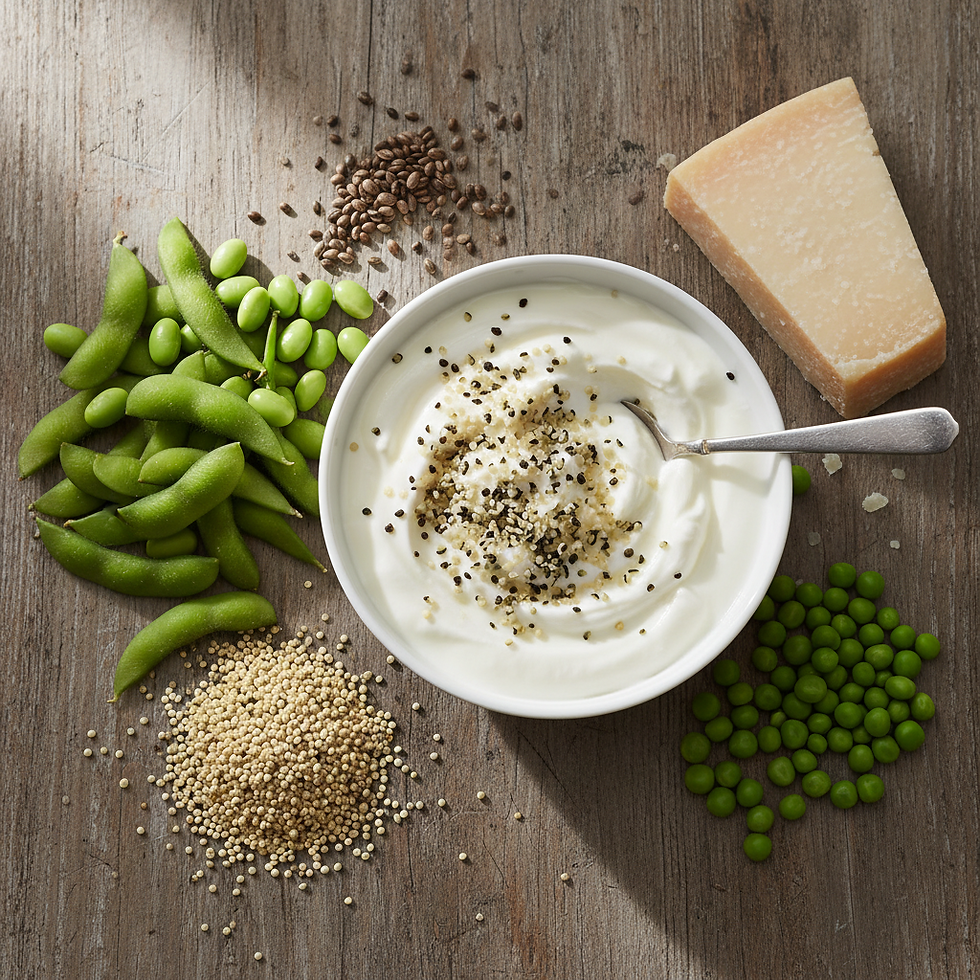
Most people think protein means chicken breast, eggs, or a scoop of powder blended into a shake. But your diet is probably already full of foods that pack a serious protein punch, and you might not even realize it. Here are five surprising sources of protein that are likely already sitting in your fridge or pantry.
1. Greek Yogurt
Greek yogurt looks like a simple breakfast staple, but the numbers are striking. A single cup of low-fat Greek yogurt delivers around 20 to 24 grams of protein. That is nearly double what you get from regular yogurt, because Greek yogurt goes through an extra straining process that removes excess liquid and concentrates the protein.
Beyond protein, Greek yogurt brings calcium, probiotics, and a creamy texture that works in both sweet and savory recipes. Use it as a base for dips, swap it in for sour cream, or stir it into sauces. You get a significant protein boost without changing much about how you eat.
2. Edamame
Edamame, the steamed green soybeans served at sushi restaurants, is one of the most underrated proteins in the plant world. One cooked cup of shelled edamame contains roughly 18.5 grams of protein, making it comparable to a small chicken breast. Better still, it is a complete protein, meaning it provides all nine essential amino acids your body cannot produce on its own.
Edamame is also loaded with fiber, iron, and folate. Toss it into salads, stir-fries, or grain bowls. Buy it frozen for a convenient, affordable option that takes minutes to prepare. If you have been treating it as a side snack at a restaurant, it is time to bring it home more often.
3. Quinoa
Quinoa gets a lot of attention as a healthy grain, but its protein story is what really sets it apart. One cooked cup provides 8 grams of protein, and like edamame, it contains all nine essential amino acids. Most grains, including rice and oats, are low in one or more essential amino acids, which makes quinoa genuinely unusual in the grain world.
It also offers a solid dose of fiber, magnesium, and iron. Because it cooks in about 15 minutes and absorbs flavors well, it works as a base for almost any meal. Use it instead of rice under curries, mix it into soups, or build a protein-rich salad around it. It is one of the easiest swaps you can make to raise your daily protein intake without any real effort.
4. Green Peas
Peas have a reputation as a bland freezer staple, but they deserve a second look. One cup of cooked green peas contains 8 grams of protein, which is actually more than a cup of whole milk. They are also packed with 8 grams of fiber, plus iron, vitamin C, and vitamin K.
The food industry has noticed. Pea protein is now one of the most popular plant-based protein powders on the market, used in everything from protein bars to meat alternatives. You do not need any of those products, though. Simply adding a cup of peas to pasta, soup, or rice gives your meal a meaningful protein boost at very low cost.
5. Hemp Seeds
Hemp seeds are small, mild, and easy to overlook, but three tablespoons deliver 10 grams of complete protein alongside a rich supply of omega-3 fatty acids and magnesium. They are one of the few plant foods that are both a complete protein and a good source of healthy fats at the same time.
Their flavor is subtle and slightly nutty, which makes them easy to add without changing the taste of a dish. Sprinkle them over yogurt, blend them into smoothies, stir them into oatmeal, or mix them into salad dressings. Because they require no cooking and no prep, hemp seeds might be the simplest protein upgrade on this list.
A Quick Look at the Numbers
Here is how these five foods stack up side by side:
Food | Serving Size | Protein per Serving |
|---|---|---|
Greek Yogurt (low-fat) | 1 cup | 20–24 grams |
Edamame (shelled, cooked) | 1 cup | 18.5 grams |
Quinoa (cooked) | 1 cup | 8 grams |
Green Peas (cooked) | 1 cup | 8 grams |
Hemp Seeds | 3 tablespoons | 10 grams |
You Do Not Need to Overhaul Your Diet
The best protein strategy is not about eating plain chicken at every meal or buying expensive supplements. It is about recognizing that protein is hiding in foods you already enjoy and finding small ways to add more of them throughout the day.
Swap white rice for quinoa. Add a handful of edamame to your lunch bowl. Sprinkle hemp seeds onto your morning yogurt. Toss frozen peas into your pasta. Each of these swaps takes almost no effort, but together they can meaningfully raise your daily protein intake and keep you feeling full and energized longer.
The goal is not perfection. It is building habits around foods you already like, so eating well stops feeling like a chore.
Disclaimer: This article is for informational purposes only and does not constitute medical or nutritional advice. Consult a registered dietitian or healthcare professional before making significant changes to your diet.

Comments