Create the Perfect Balanced Pasta Bowl Recipe for Healthy Eating
- Jillian Guralski
- 5 days ago
- 6 min read

Pasta has a reputation it doesn't deserve. For years, it was labeled the enemy of healthy eating, something to cut out or feel guilty about. The truth is simpler: it's not the pasta that's the problem, it's what surrounds it. Build your bowl with the right balance of protein, fiber-rich vegetables, and healthy fats, and pasta becomes one of the most satisfying, nourishing meals you can make.
This guide walks you through exactly how to do that.
Why a Balanced Pasta Bowl Works
The concept is built on the Plate Method, a practical nutrition framework that divides your meal into three zones: half the bowl filled with vegetables, a quarter with a complex carbohydrate like pasta, and a quarter with lean protein. Add a small amount of healthy fat to tie it together, and you have a complete, macro-balanced meal.
What makes this approach effective is satiety. Protein and fiber both slow digestion, which keeps you full longer and prevents the energy crash that often follows a plain carb-heavy plate. A well-built pasta bowl can deliver 30 to 40 grams of protein and 7 to 12 grams of fiber in a single serving, while staying between 400 and 550 calories.
It also means you are not depriving yourself. You are eating real food, in satisfying portions, without obsessing over elimination.
Choosing the Right Pasta Base
Your pasta choice sets the nutritional foundation of the bowl. Standard refined white pasta is not off the table, but swapping it for a higher-fiber, higher-protein alternative gives you more from every bite.
Chickpea pasta delivers roughly 13 to 15 grams of protein and up to 8 grams of fiber per serving. It holds its texture well and has a mild, slightly nutty flavor that pairs with almost any sauce.
Lentil pasta is similarly rich in protein and iron, making it an excellent choice for plant-based bowls.
Whole wheat pasta offers more fiber than white pasta and a heartier bite. It works well with robust sauces and bold vegetables.
White pasta is still a valid option if the rest of your bowl is loaded with protein and vegetables. Balance is about the full picture, not one ingredient.
For this recipe, chickpea penne is the recommended base. Cook it to al dente and reserve a cup of pasta water before draining. That starchy water becomes the secret to a silky, light sauce without adding cream or butter.
The Four Components of a Balanced Bowl
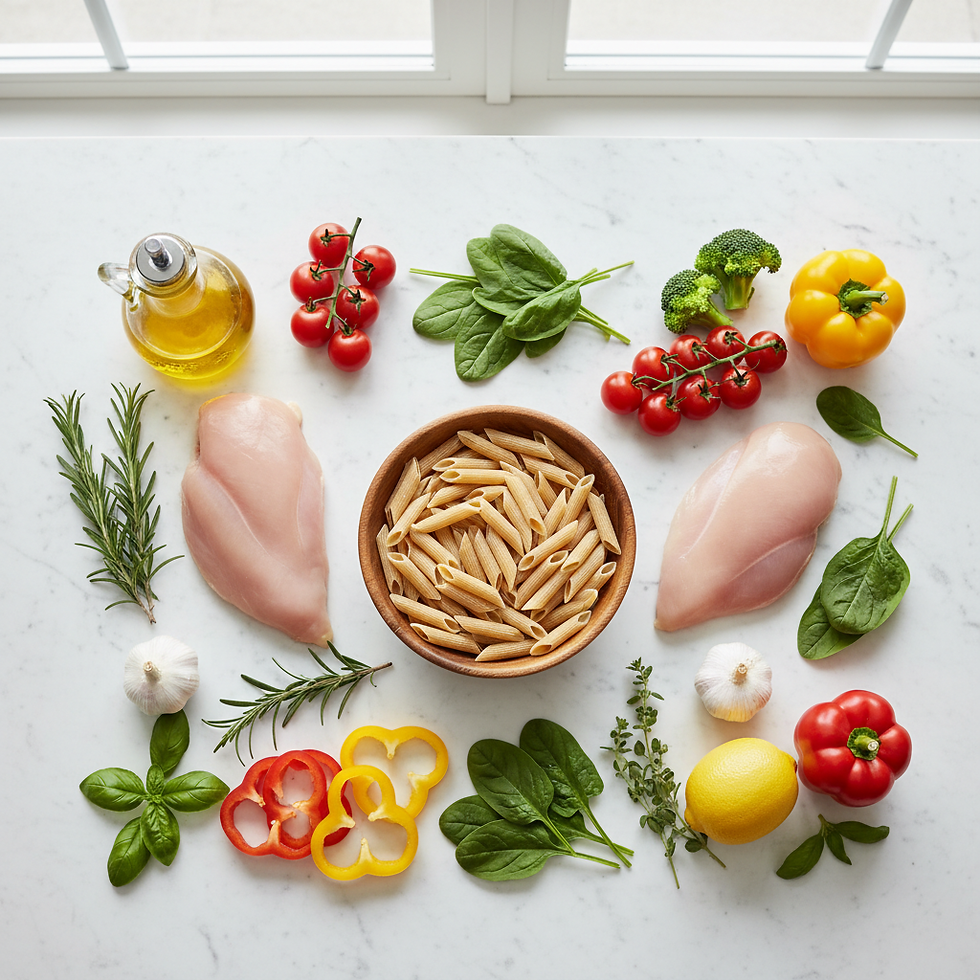
1. Lean Protein
Protein is the anchor of the bowl. It supports muscle repair, keeps hunger at bay, and helps stabilize blood sugar after a carbohydrate-containing meal.
Good options include:
Grilled or pan-seared chicken breast (the most popular choice for its mild flavor and high protein-to-calorie ratio)
Lean ground turkey, browned with garlic and herbs
Sauteed shrimp for a lighter, faster-cooking option
Canned or roasted chickpeas for a fully plant-based bowl
White beans or edamame if you want extra fiber alongside your protein
Aim for 4 to 6 ounces of protein per serving. Season it well before cooking since this is where most of your flavor will come from.
2. Volume Vegetables
Vegetables are the largest part of the bowl by volume. They add fiber, vitamins, and bulk without adding many calories, which means you feel full without overeating.
The best vegetables for pasta bowls are ones that cook quickly or can be eaten raw:
Spinach or kale wilts in under two minutes in a warm pan and absorbs surrounding flavors beautifully.
Cherry tomatoes burst when sauteed, releasing a bright, acidic juice that acts as part of the sauce.
Broccoli florets add satisfying texture and are rich in vitamin C and folate.
Zucchini and bell peppers cook fast, bring color, and add a subtle sweetness.
Mushrooms add umami depth, particularly valuable in plant-based bowls where you want that savory, meaty quality.
Use at least two types of vegetables per bowl. More variety means a wider range of micronutrients and a more satisfying eating experience.
3. Healthy Fats
Fat gets the sauce going and carries flavor across every component of the bowl. The key is using quality fats in measured amounts.
Extra virgin olive oil is the foundation. A tablespoon in the pan is enough to sauté garlic and vegetables and coat the finished pasta.
Avocado sliced on top adds creaminess and healthy monounsaturated fat.
Toasted pine nuts or walnuts add crunch and a small dose of omega-3s.
Tahini-based sauces are excellent for Mediterranean-style bowls and blend seamlessly with lemon and garlic.
Target 12 to 18 grams of fat per bowl, mostly from unsaturated sources. That range keeps the bowl satisfying without tipping it into heavy territory.
4. Flavor Builders
These are the ingredients that make the bowl feel like a real recipe rather than a collection of healthy parts thrown together.
Minced garlic, sauteed in olive oil until golden
Lemon juice and zest to brighten everything and cut through richness
Red pepper flakes for subtle heat
Fresh basil or flat-leaf parsley stirred in at the end
A small amount of grated parmesan or feta for a salty, savory finish
Pasta water, added a splash at a time, to create a light, glossy sauce without heavy cream
The Full Recipe: Chicken, Spinach, and Cherry Tomato Pasta Bowl
Serves: 2 | Prep time: 10 minutes | Cook time: 20 minutes
Ingredients
4 oz (dry) chickpea penne
8 oz chicken breast, sliced thin
2 cups fresh baby spinach
1 cup cherry tomatoes, halved
1 cup broccoli florets, small
1.5 tbsp extra virgin olive oil
3 cloves garlic, minced
Juice and zest of half a lemon
1/4 tsp red pepper flakes
Salt and black pepper to taste
1/4 cup reserved pasta water
2 tbsp grated parmesan (optional)
Fresh basil to finish
Method
Cook the pasta. Bring a salted pot of water to a boil. Cook chickpea penne for 7 to 8 minutes until al dente. Reserve 1/4 cup of pasta water before draining. Set both aside.
Season and cook the chicken. Pat chicken slices dry, season with salt, pepper, and a pinch of red pepper flakes. Heat 1 tbsp olive oil in a large pan over medium-high heat. Cook chicken for 4 to 5 minutes per side until golden and cooked through. Remove and set aside.
Build the vegetable base. In the same pan, reduce heat to medium. Add the remaining half tablespoon of olive oil and the garlic. Cook for 60 seconds until fragrant. Add the cherry tomatoes and broccoli. Cook for 3 to 4 minutes until the tomatoes begin to soften and the broccoli is bright green. Add spinach and toss until just wilted, about 90 seconds.
Combine everything. Add the drained pasta to the pan. Pour in the reserved pasta water and toss everything together over low heat for one to two minutes. The sauce will form naturally from the pasta water, olive oil, and tomato juices. Add lemon juice and zest, and stir through.
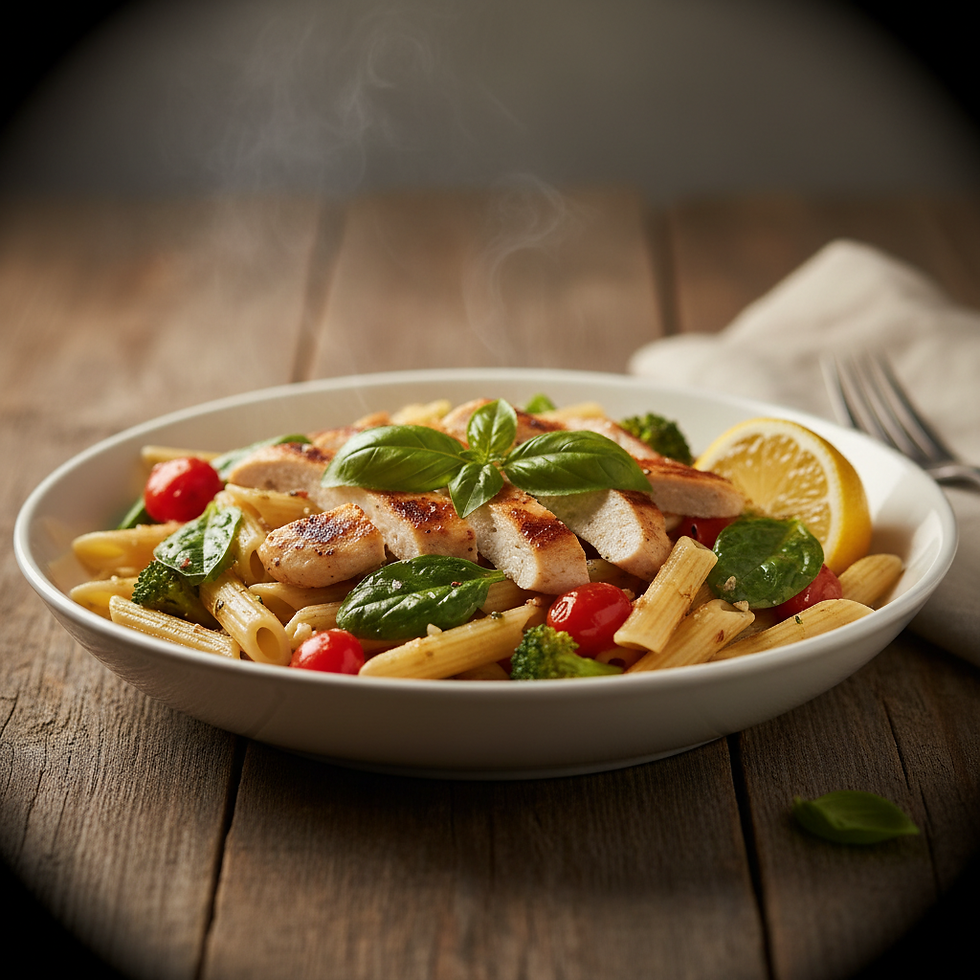
Plate and finish. Divide into two bowls. Place sliced chicken on top. Finish with fresh basil, parmesan if using, and an extra crack of black pepper.
Nutrition Per Serving (Approximate)
Nutrient | Amount |
|---|---|
Calories | 480 kcal |
Protein | 38g |
Carbohydrates | 44g |
Fiber | 10g |
Fat | 14g |
Variations Worth Trying
Once you understand the framework, it adapts easily to whatever you have on hand or crave.
Mediterranean
Swap chicken for shrimp or white beans. Use kalamata olives, sun-dried tomatoes, and feta. Finish with a tahini-lemon drizzle and fresh oregano.
Plant-Based
Use lentil pasta and roasted chickpeas as the protein. Load up on mushrooms, zucchini, and roasted red pepper. Nutritional yeast adds a cheesy, savory note without any dairy.
Meal Prep
Cook double the recipe and store components separately in the fridge. Pasta keeps for up to four days. Reheat in a pan with a splash of water and everything comes back together in minutes.
Small Adjustments That Make a Big Difference
You do not need to overhaul your diet to eat better. A few deliberate swaps in a single recipe can improve the nutritional profile of a meal you already enjoy.
Use chickpea or lentil pasta instead of white pasta and you roughly double the protein and fiber in the base alone.
Stretch sauce with pasta water instead of cream and you cut the fat without losing the texture or satisfaction.
Add two extra handfuls of greens and you add almost no calories while significantly increasing your vitamin K, iron, and folate intake.
Season your protein properly before cooking and you need less sauce overall, which keeps the bowl lighter.
None of these changes require special ingredients or extra time. They are decisions made while cooking, not sacrifices made at the table.
Build Your Bowl, Your Way
A balanced pasta bowl is not a diet meal. It is a well-designed meal. When you have the right components in the right proportions, pasta earns its place on the plate alongside lean protein and a pile of vegetables, all working together to fill you up, fuel your body, and taste good enough to want again tomorrow.
Start with this recipe. Then adjust it to what you love. Once the framework is in your hands, the bowl becomes whatever you need it to be.

Comments